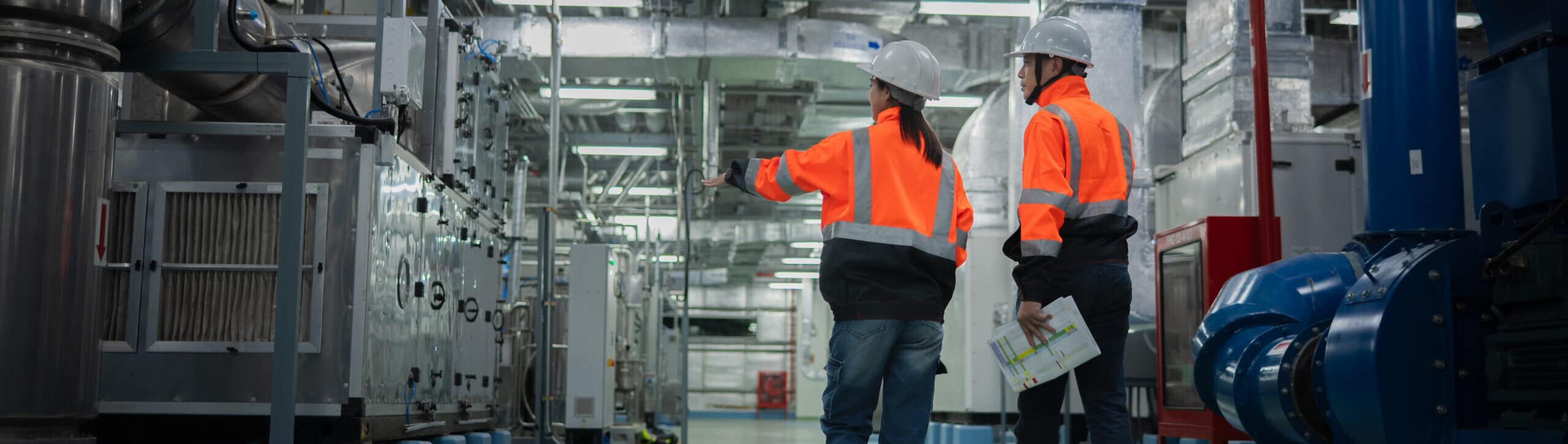
What CEOs Need to Know About Accelerated Depreciation for Facilities
The One Big Beautiful Bill Act (OBBBA), signed into law in 2025, delivered a suite of tax changes aimed at strengthening domestic manufacturing. One of the most valuable provisions for manufacturers may be the new provision permitting 100% bonus depreciation for certain newly constructed or converted buildings used in qualified production activities. If applicable, this deduction can create significant near-term tax savings.
“This provision represents a major opportunity for manufacturers considering new facilities,” said Carrie Sowders, Partner, Aldrich CPAs + Advisors. “By allowing 100% bonus depreciation for qualifying buildings, this legislation opens the door to significant tax savings that can profoundly impact cash flow when the facts, goals and regulations align.”
What Does the New Provision Allow?
The provision expands bonus depreciation to include certain types of nonresidential real property. These are buildings that would typically be depreciated over long periods.
To qualify for 100% expensing, the property must:
- Be used as an integral part of a qualified production activity, such as manufacturing, processing, or refining tangible goods
- Have construction that begins after January 19, 2025 and before January 1, 2029
- Be placed in service in the U.S. (or U.S. territories) on or before December 31, 2030
- Be original-use property, meaning it must be newly constructed or converted from a non-production use
- Original use must begin with the taxpayer, and the taxpayer must irrevocably elect to apply the provision
The law specifically excludes any portion of the property used primarily for office functions, research, administrative, or sales services. For mixed-use buildings, costs must be allocated between qualifying and nonqualifying uses.
What’s the Opportunity for Manufacturers?
Under traditional tax law, buildings used in manufacturing operations are depreciated over 39 years. That long timeline delays the tax benefits of capital reinvestment. Under the provision, eligible production facilities may be fully expensed in the year they are placed in service rather than recovered over decades.
For manufacturers planning to expand capacity, modernize facilities, or bring production back to the U.S., this can mean:
- Major upfront tax deductions that improve cash flow and return on investment
- Better alignment of tax treatment with operational investment
- A significant incentive to accelerate otherwise planned projects into the eligible window
Additionally, certain previously used buildings acquired after January 19, 2025 may qualify if they have been out of production use since at least 2020 and are converted to a qualifying production purpose, subject to meeting all applicable requirements.
What to Watch Out For
There remain undefined terms critical to decision making. Here are four key areas that Aldrich is actively monitoring:
- Will the lessor rule prohibit companies utilizing common arrangements that separate the real estate from the operating business from benefiting from the provision?
- More often than not, real estate is owned outside of the operating business in an LLC and with common ownership.
- The provision as written states that, “in the case of property with respect to which the taxpayer is a lessor, property used by a lessee shall not be considered to be used by the taxpayer as part of a qualified production activity.”
- It remains unclear whether this language would disqualify commonly used related-party leasing structures.
- What is the definition of qualified production activity?
- Using food processing, for example, producing berry jam would very likely be considered production for these purposes, but what about packaging whole berries?
- It is unclear whether this constitutes a sufficient transformation to qualify, and guidance will be needed.
- How should the qualified portions of the building bedetermined and costs allocated?
- Is the provision available forexpansion of or improvements to existing buildings?
This is a federal provision, but state-level conformity may vary. In addition, if a facility ceases to be used in qualified production within 10 years of being placed in service, depreciation recapture rules apply, causing excess depreciation to be included as ordinary income in the year this occurs.
Aldrich Insights
If your business is planning a facility expansion, now is the time to evaluate whether your project qualifies and how to structure it for maximum tax efficiency.
Planning, documentation, and cost segregation studies will be essential to substantiate qualified use and maximize eligible deductions.
Getting Started
For more information or to better understand how a facility expansion could benefit your manufacturing company, reach out to Aldrich.