Changing Conditions
The past year has been a study of contrasts for Oregon’s private companies. Across the Portland metro area, business leaders continue to demonstrate creativity and perseverance, even as uncertainty rises. At Aldrich, the largest accounting firm headquartered in Oregon, we work with many of these companies every day, witnessing equal measures of caution and determination.
In conversations with local leaders, one message stands out: The challenges are real, but so is the resolve to adapt. Oregon business owners aren’t waiting for conditions to change. Instead, they’re changing how they lead, plan, and invest.
To help us better understand how leaders are managing the current environment, we conducted a survey, which led to the Aldrich Uncertainty Report, a research project that delivered data driven insights including:
- Only 20% of Oregon business leaders say they’re optimistic about revenue growth in the year ahead, far fewer than their peers in California or the Mountain West;
- 30% of Oregon leaders have a more pessimistic outlook than they did just six months ago;
- 60% are planning for continued cost and inflation volatility over the next year; and
- 55% are anticipating supply chain issues over the next year
Beyond those national trends, many leaders point to a more local concern: the business environment itself. Declining rankings for tax competitiveness and the overall business climate make it harder for Oregon-based companies to expand, reinvest, and create jobs. These conditions don’t just affect the bottom line; they ripple through communities, impacting wages, hiring, and long-term opportunities.
How Oregon Companies are Taking Action
As a native Oregonian who grew up in Newberg, I witnessed through my father’s lifelong career at a family-owned company the impact of a business that cared deeply about its people and community. It shaped my view of leadership and led me to Aldrich, a Salem-founded accounting, wealth, and capital firm that puts people, clients, and community at the center of every decision.
Now, as CEO of Aldrich, I see these same values reflected in the owners, executives, employees, and clients we serve—each leading with integrity and a commitment that extends beyond profits. Those ethics shape how they are responding to today’s turbulent climate.
Scenario Planning is Essential
Even with so much uncertainty, Oregon companies aren’t standing still. In fact, 70% of business leaders say scenario planning has become their most important tool for navigating what’s ahead. Nearly half have already overhauled their strategic plans, and another 25% have made tactical adjustments to stay agile.
That tells me we’re seeing a real shift in mindset. Business owners aren’t just reacting anymore. Rather, they’re planning for multiple outcomes, testing assumptions, and staying ready to move when conditions change. While 45% have delayed or reduced capital investments, only 25% have adjusted their workforce strategies, though many are preparing for that possibility.
The common thread is clear: Leaders are focused on protecting their people and maintaining stability, even as they rethink how to build resilience for the long term.
Push for Policies That Support Growth
Oregon’s long-term strength depends on balancing values with competitiveness. Local business leaders aren’t asking for special treatment. They’re asking for common-sense policies that make growth possible.
Our drop in tax competitiveness and business climate rankings has not gone unnoticed. Business leaders across the state want an environment that allows them to reinvest in their people, communities, and futures.
That means creating regulations and tax structures that reward investment rather than restrain it. Oregon companies want to grow, innovate, and create jobs here at home, but they need policies that make it easier to do so while staying true to the values that make this state unique.
A People-First Strategy that Works for Portland
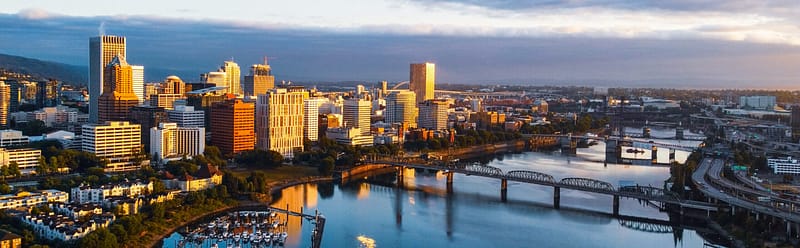
In Oregon, business owners lead companies that reflect the best of our state. They are places where values and results coexist. This is especially true in Portland, where leaders continue to shape businesses that invest in employees, support communities, and strengthen the region for the long term.
For Aldrich, this makes perfect sense. Our philosophy is simple: People come first. To serve our clients and communities well, we start by investing in our employees. That is not just a cultural belief; it is a business strategy that works.
This approach is rooted in servant leadership, something we have practiced long before it became a buzzword. Time and time again, we see that when people feel supported, they bring their best to the clients and communities they serve.
Oregon’s business community has always found strength in resilience and collaboration. This is something I first learned as a Newberg kid watching my father’s experience of working for the same company his entire career. Even in today’s challenging times, the drive to build, adapt, and contribute never fades. The leaders I talk with aren’t waiting for conditions to improve; they’re leading the way. They’re shaping a future defined by innovation, purpose, and care for their people and communities.
That is what gives me confidence in Oregon’s future.
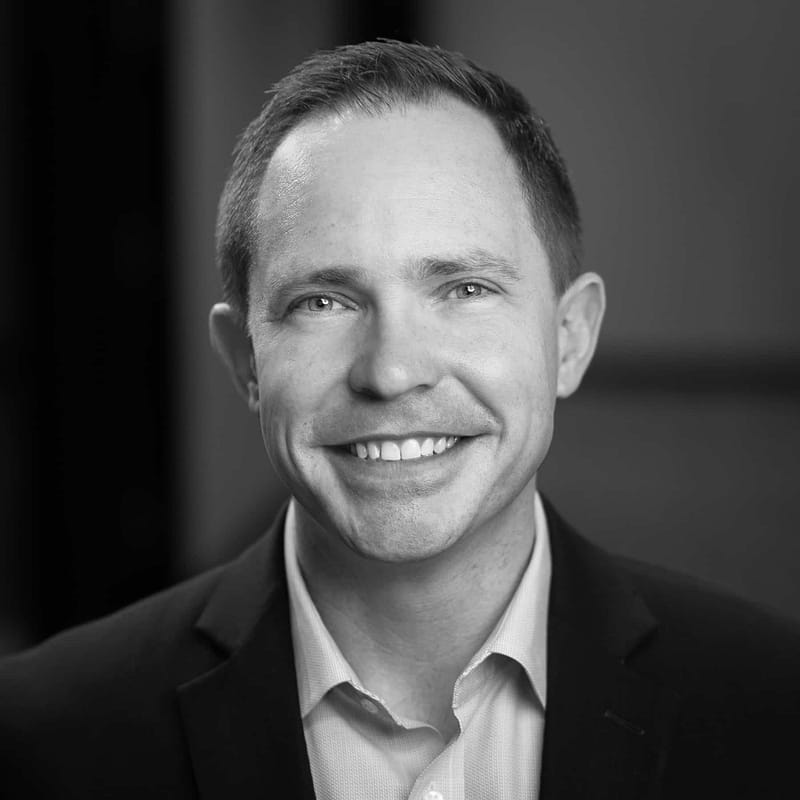
About John Lauseng
John Lauseng is the chief executive officer of Aldrich, a role he assumed on July 1, 2020.
An Oregon native, John joined Aldrich in 2009 as an auditor in the accounting firm. He brought extensive experience with financial statement assurance, business consulting, and financial due diligence to the Aldrich manufacturing niche and helped companies strengthen their financial reporting and internal controls to support their strategic business goals. Prior to becoming CEO, he served as president of Aldrich CPAs + Advisors LLP, overseeing service quality, processes, and technical staffing resources for the entire Aldrich footprint.
If you would like to know more about what we are hearing from private companies across the West, and how they are adapting, planning, and leading through uncertainty, you can explore the findings in our Aldrich Uncertainty Report.